top of page
Phase 03
Analysis & Journal Development
Reflection on Graham Haworth/Haworth Tompkins Presentation
REFLECTION

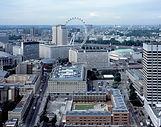
All inner-city housing has the difficulty of balancing the scale and monumentality expected by the urban streetscape with the privacy and domesticity of households. A strong typology was required for such a prominent location, one that could be easily comprehended by both the public and the residents. We wanted a minimal design that established very clear public and private signals while also having enough presence to sustain the metropolitan bustle. As a result, the houses were built around an open courtyard, creating a hollow square. This allowed for the creation of a huge planted garden as a common place.
REFLECTION


Iroko Housing, 2004
urban housing on London’s South Bank by Coin Street Community Builders
Resonance from the Q&A dicussion + Studio discussion on "Flexible Housing"
RESONANCE
RESONANCE
2 approaches of flexible housing design were introduced in the article:
soft and hard use
1. soft approach is highly indeterminable and resident-oriented, which is relatively more "flexible" but may be less efficient and cost more.
2. While hard approach is designer-oriented, organising the most efficient and operable solution for adaptability, but it is usually stricter on the spatial prerequisite. In many recent projects analysing flexible living, such as "Elementable" by UCL RC4, are likely to define the residents' lifestyles in a certain formulated procedure.


Precedent Study:
vincent callebaut masterplans a self-sufficient city of science in rome
PRECEDENT STUDY
French architect vincent callebaut has devised a masterplan to transform rome’s military district into a self-sufficient urban ecosystem. the ‘città della scienza’, or the ‘city of science’, encourages the promotion of sustainable design, low carbon transportation and renewable energies.
PRECEDENT STUDY


through referencing land art, a movement in which landscape and the work of art are inextricably linked, callebaut’s proposal is covered with edible plants that are intelligent, self producing and organic. consequently, roofs and balconies become the new grounds of a green city, while the orchards and food gardens become the primary structures that dominate the site.
Further exploration inspired by the project:
FURTHER DEVELOPMENT


FURTHER DEVELOPMENT

EPSILION JOURNAL PHASE 03 EPSILION JOURNAL PHASE 03 EPSILION JOURNAL PHASE 03 EPSILION JOURNAL PHASE 03 EPSILION JOURNAL PHASE 03
bottom of page